
Cost-of-living-crisis makes no difference to CESA
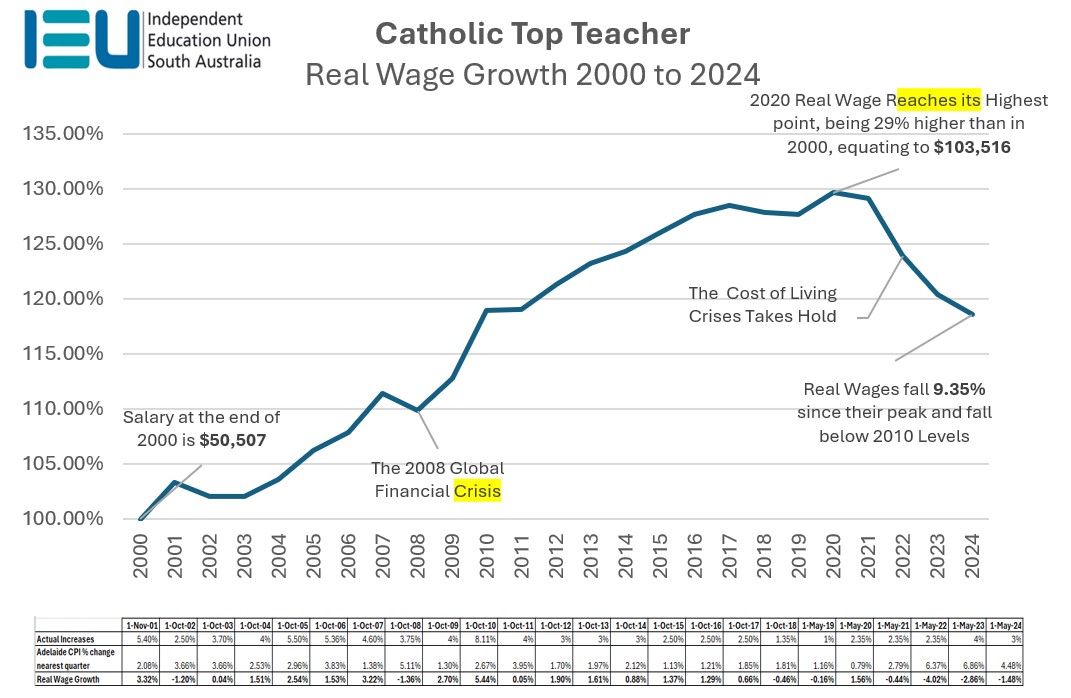
| When educators are battling a cost-of-living crisis, with their living standards plummeting, Catholic Education South Australia’s (CESA) response to our salary claim is blunt and uncaring: “It’s non-negotiable.”
At our latest bargaining meeting, the IEU again raised the critical issue of salary.
This stance is unacceptable, and we believe falls short of the good faith bargaining requirements under the Fair Work Act, which obliges employers to genuinely engage with union claims and proposals.
With living standards eroded, the cost of living through the roof and staff at other like schools receiving significant wage increases, CESA should have been willing (and able) to discuss your pay and make a fair and reasonable offer based on the current economic climate. The Real Impact on You
Our Claim: Fair and Evidence-BasedThe IEU’s salary claim is clear, reasonable and based on sound economic analysis:
The Employer’s Offer: Inadequate and UnjustifiedBy contrast, employers have tabled:
No evidence, analysis, or rationale has been provided for this position. The IEU’s independent monitoring of ongoing Catholic school building announcements and new campuses demonstrates to us that the employers are unwilling to prioritise their employee’s wellbeing through fair wages, preferring to use YOUR salary increase money to fund projects that have visual appeal to future fee payers. Whilst on future fee payers, we note this statement in the Catholic publication The Southern Cross (29 August – website), “Since 2021 the South Australian Commission for Catholic Schools (SACCS) has waived fees for the first two terms of Reception for mid-year intake students in Diocesan schools, in recognition of the impact of rising living costs.” It is plain to see that the Catholic system acknowledges there is an impact from ‘rising living costs’ but for some reason, this doesn’t extend to the salaries of its employees.
Other states are doing better:
*Source – The Point Term Three 2025, page 2. E&OE. South Australia risks being left at the bottom of the Catholic sector pay scale with IEU Victoria seeking a 37% increase for Catholic employees over three years. To accept CESAs position will enshrine SA Catholic Teachers as some of the lowest paid when compared to Catholic teachers around Australia.
Members in Catholic schools are doing no less work than in 2020 and are often doing much more. We believe they deserve to have their standards of living maintained. Curriculum Extension PaymentThe Curriculum Extension Payment (payment for a teacher to coach or oversee sports teams or activities), set at just $28.95, has barely shifted since its inception in 2010 and has not increased at all since 2022. Employers have now proposed lifting it to $35, but this remains far below the professional value of teachers’ time. To put this in perspective, the national minimum wage is $24.95 per hour, yet qualified teachers under the Enterprise Agreement earn between $50.59 and $80.97 per hour. That means the employer’s proposed rate would pay teachers only 35–49% of their actual hourly rate for doing additional extra curricula work. This does not take into account that this work often occurs after hours and on weekends when penalty rates would normally apply for other employees. How is that fair when some Catholic schools are employing “coaches” at substantially higher rates to do the same work? This approach appears to be more about keeping costs down, not valuing existing educators’ expertise. The IEU is seeking a fair and transparent arrangement: that the Curriculum Extension Payment be based on a teacher’s current hourly rate, properly recognising the professional work teachers are being asked to do. Expansion of ESO hoursEmployers have proposed extending the span of hours for ESOs from 8:00am–6:00pm to 7:00am–7:00pm. For many members, this change would mean a direct loss of pay, as hours that currently attract penalty rates would instead fall within the “ordinary” span of hours. When we asked the employer how many employees would be affected and what the financial impact would be, they admitted they had not even made that assessment. The IEU is clear: we do not support changes that leave ESO members worse off. Workload and Class SizeIn relation to Workload and Class Size the employer informed us that would not be decreasing the maximum student contract time by 60 minutes nor decreasing class sizes (Practical Class / Early Years). We know that this is a big issue for teachers, and we will continue to be guided by you to fight for these changes that will make a direct difference to your workload. Bargaining Update – Key Issues
|