

IEU(SA) member speaks at ACTU Housing Summit, Canberra
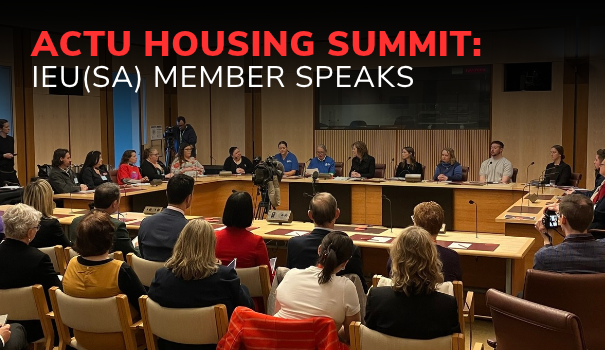
IEU members joined workers from across Australia to share their experiences of the housing crisis at the ACTU Housing Summit held today at Parliament House in Canberra.
The summit, attended by Minister for Housing Clare O’Neil and other government MPs and senators, they heard first-hand accounts of the housing challenges facing teachers, nurses, disability support workers, retail employees, local government workers and many others.
Housing costs and rising rents have become the most significant cost-of-living pressures for working Australians. While average wages have increased by around 17 per cent over the past five years, rents have risen by 23 per cent and house prices by a staggering 43 per cent.
For many education workers the impact is severe. IEU members are increasingly being priced out of the communities where they teach and serve.
IEU members, joined by Federal Secretary Brad Hayes, shared their first-hand experiences and insights into the housing challenges facing teachers, school leaders and support staff.
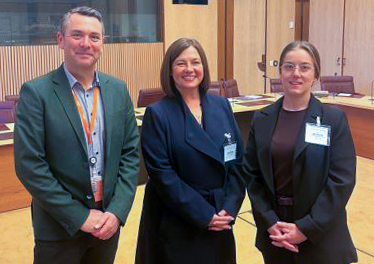
Image: Brad Hayes, IEU Federal Secretary, Kirsty, IEU NSW/ACT member and Cassie, IEU(SA) member
Teachers facing unsustainable commutes and extra work
Cassie, a primary school teacher and IEU member from the state’s mid-north region, but working in Adelaide, spoke about the growing difficulty teachers face in achieving home ownership.
She highlighted the reality that many teachers are taking on second jobs on weekends to meet housing costs, despite already working in demanding full-time positions.
Cassie also described how teachers are forced to travel increasingly long distances to work because housing near their schools has become unaffordable. These lengthy commutes add to workload pressures, reduce quality of life and contribute to career burnout.
Rural schools struggling to attract staff
Kirsty, a Catholic school principal and IEU member from western New South Wales, outlined the major housing challenges affecting rural and remote communities.
Limited housing availability is making it increasingly difficult to attract and retain school staff. In some cases, the only option has been to rely on the generosity of other staff offering spare rooms in their own homes to secure accommodation for new teachers.
Unions call for urgent action
The union movement is calling for urgent action in three key areas:
- Increased investment in public housing as essential infrastructure for essential workers
- Stronger, enforceable rights and standards for renters
- Reforming the tax settings which have undermined housing affordability
Australia’s housing market is complex and shaped by competing interests. However, one thing is clear: relying on private, profit-driven development alone has failed to deliver enough affordable housing.
Housing for essential workers should never be treated as a special privilege. It is a fundamental to strong communities, quality education and the delivery of vital public services.
22 September 2026