

Tax and your investment returns
Did you know the tax you pay on your investments can vary depending on how you hold them – whether in your own name, through super, a trust or a company?
How your investments can grow
Investment returns generally come from two sources:
- Income – interest, rent, or dividends.
- Growth – an increase in value, also known as a ‘capital gain’.
Both can attract tax, and the amount you pay depends on the structure used to hold the investment.
Where you ‘hold’ your investment matters
There are 4 common ways to hold investments in Australia, each with a different tax treatment:
- Your own name: Assets are held personally using your tax file number. Tax is generally paid at your marginal tax rate (up to 45% plus Medicare levy).
- Company: Investments are held through a company structure. Tax is generally paid at a flat rate of 25%-30%.
- Trust: Income is distributed to beneficiaries, who pay tax at their own marginal tax rate.
- Superannuation: Investments are held within your super account and are generally taxed between 0% and 15%.
How investments are taxed
Investment returns are taxed in two ways:
- Income tax – interest, rent or dividends are taxed in the year they are received, at the rate of the structure in which it is held. In your own name it could be as high as 45%, in super it could be as low as 0%. By paying less tax on the same income, you get to keep more of it.
- Capital gains tax (CGT) – when you sell an investment for more than you paid, tax may apply to the gain. Changes from 1 July 2027 may increase some CGT liabilities, making it important to understand how your investments are structured.
The impact of tax over time on your investments
Assume you invest $10,000, earning 7% per year, with tax paid annually: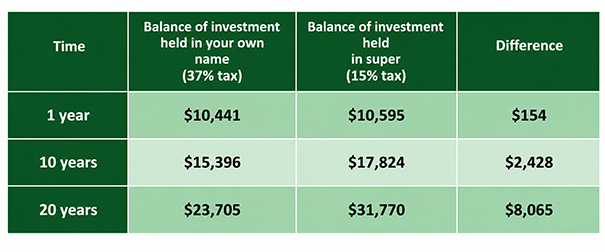 This example is for illustrative purposes only and assumes a constant annual return of 7% and tax paid on investment earnings each year. Actual investment returns and tax outcomes will vary.
This is why it matters how much tax you pay. After 20 years, investing through super results in an additional $8,065 in your pocket compared with holding the same investment in your own name. The amount of tax you pay within super will depend on a range of factors, including whether you’re saving for retirement or drawing an income stream. Learn more about how super is taxed.
How NGS Advice can help you understand tax and super
Whether you’re reviewing your investments, exploring your options or wanting to understand the impact of tax and super, NGS Advice can provide clear, practical support digitally, over the phone or face-to-face.
This information is general information only and does not take into account your objectives, financial situation or needs. Before acting on this information, or making an investment decision, consider whether it is appropriate to you and read our Financial Services Guide, Product Disclosure Statements and Target Market Determinations available at ngssuper.com.au. You should also consider obtaining financial, taxation and/or legal advice tailored to your personal circumstances before making a decision. Issued by NGS Super Pty Ltd ABN 46 003 491 487 and AFSL 233 154.